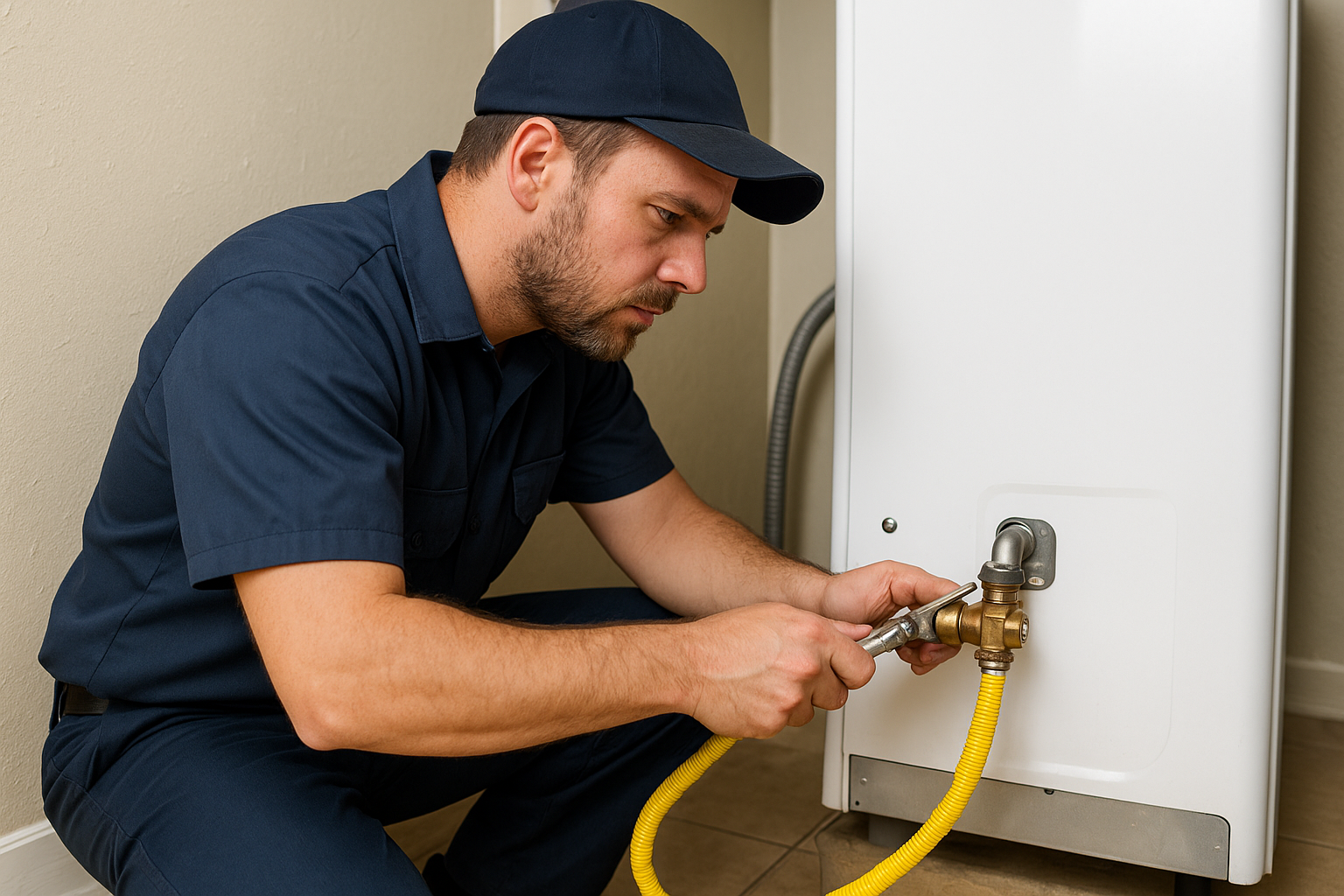
Houston's subtropical climate brings high humidity that accelerates corrosion on older steel gas lines common in Heights and Montrose bungalows built before 1960. Appliance gas connections here require yellow CSST or black iron pipe rated for the soil movement found in Harris County clay, plus dielectric unions to prevent galvanic reaction when tying into copper or aluminum appliance lines. Technicians check for proper sediment traps and shutoff valves within six feet of the appliance per local code, especially in Midtown condos where tight utility closets limit access and increase leak risk during summer heat expansion.
River Oaks and Downtown high-rises often route gas through multi-story risers that demand pressure testing after any new appliance tie-in to avoid drops during peak summer demand. In nearby Katy and Sugar Land subdivisions, newer slab-on-grade homes place lines under concrete, so connections for dryers or ranges require careful excavation and sleeving to protect against shifting soil after heavy rains. Edge cases include converting electric homes in Pearland to gas appliances where existing lines may be undersized for multiple high-BTU loads like dual ovens and tankless water heaters.
Homeowners frequently overlook the need for accessible shutoffs in older Montrose properties where lines run through finished walls. Proper connections always include leak detection with soapy water or electronic sniffers after pressure testing to 1.5 times operating pressure, followed by a 15-minute hold test. This catches micro-leaks caused by vibration from nearby traffic or seasonal temperature swings that can loosen fittings over time.
Technician insight
In Houston the thing that catches most people out with Appliance Gas Connection is the age of the black iron in Heights and Montrose homes where decades of humidity have thinned threads so any new tie-in can crack the old fitting and turn a simple job into a full line replacement.
Midtown Condo Dryer Connection
Homeowner in a 1970s Midtown building needed a gas dryer installed but the existing line ended behind a finished wall. We located the stub, added a sediment trap and valve, ran CSST through the chase, and pressure tested before final hookup. The dryer now operates safely with no leaks detected.
Appliance Gas Connection Services We Offer
✓Stove Gas Line Connection
Install or repair gas supply lines to ranges and cooktops using approved materials sized for BTU load in Houston kitchens.
✓Dryer Gas Connection Installation
Connect natural gas dryers with flexible or rigid lines, sediment traps, and accessible shutoffs suited to humid Houston utility rooms.
✓Outdoor Grill Gas Hookup
Run and connect gas lines to patio grills and fire pits with weatherproof fittings that withstand subtropical rain and heat.
✓Fireplace Gas Line Connection
Tie gas logs or inserts into existing lines while verifying proper venting and shutoff placement in older Heights homes.
✓Generator Gas Connection
Provide dedicated gas supply lines for standby generators common in flood-prone Harris County neighborhoods.
Appliance Gas Connection Cost in Texas
| Service | Typical Range | What Affects It |
|---|---|---|
| Basic Stove Connection | $225–$475 | Short run in accessible kitchen; longer runs or wall repairs increase price |
| Dryer Gas Line Install | $275–$550 | Includes trap and valve; multi-story access or concrete work adds cost |
| Outdoor Grill Hookup | $350–$650 | Trenching or sleeving through foundation raises total |
| Generator Gas Connection | $400–$800 | Dedicated line from meter; distance and permitting affect final price |
Ranges are typical for Texas and confirmed with an exact written quote before any work starts.
How it works
- 1
Site Assessment
Inspect existing gas piping, appliance location, and access points in the specific Houston neighborhood home.
- 2
Material Selection
Choose CSST or black iron pipe rated for local soil conditions and calculate proper sizing for the appliance BTU demand.
- 3
Installation
Run new line with required supports, sediment trap, and shutoff valve then make the final appliance connection.
- 4
Testing And Verification
Pressure test the line, check for leaks, and confirm safe operation before leaving the job site.
Pricing
Costs depend on pipe length, access difficulty, and whether excavation or wall opening is required.