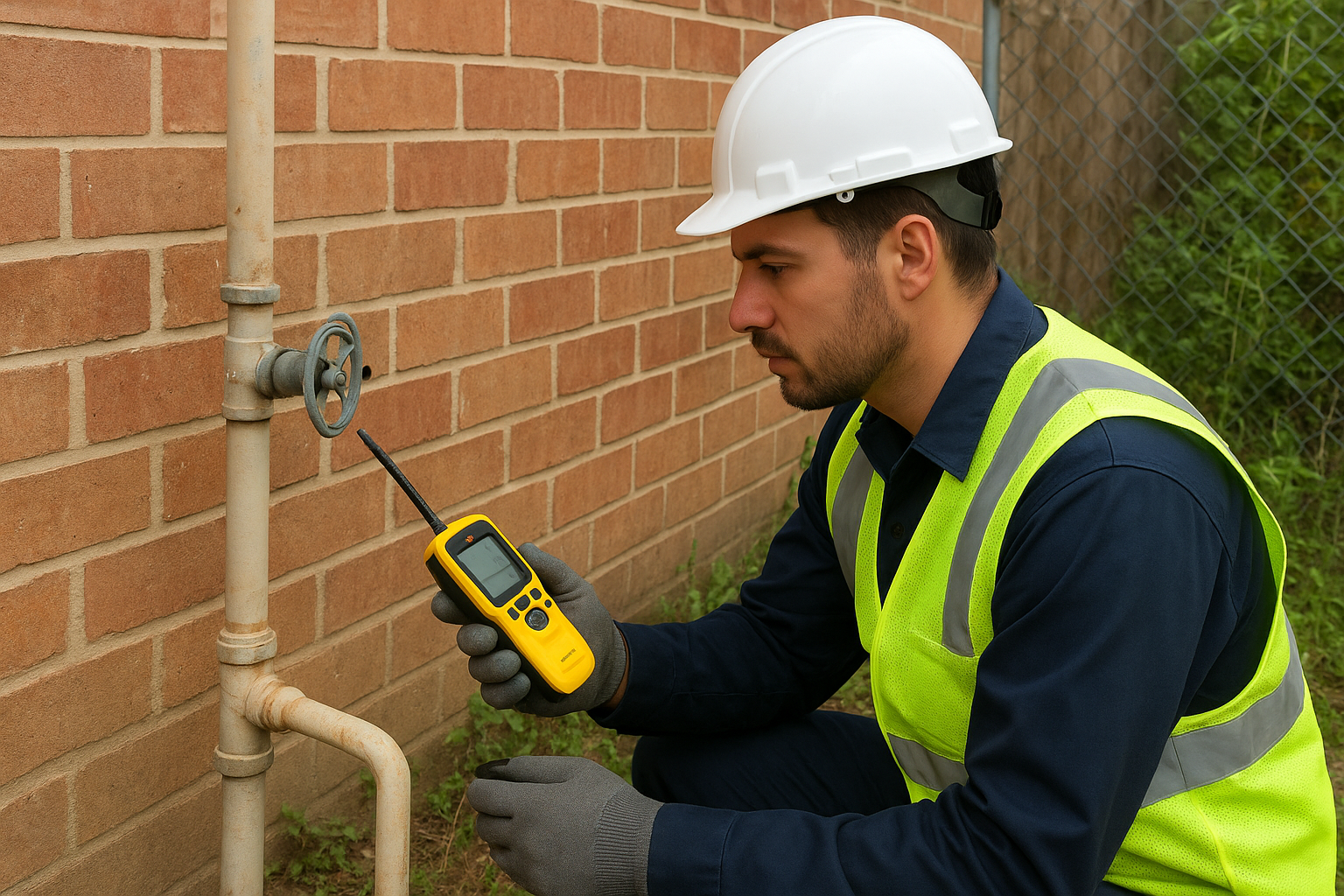
Houston's older housing stock in the Heights and Montrose often features steel gas lines installed decades ago that corrode faster under repeated summer humidity and occasional flooding in low-lying blocks. Detection requires electronic sniffers plus soap testing at every joint because small leaks can migrate along foundations before reaching living spaces. Mild winters keep soil moisture high year-round, so crews check for water intrusion at meter risers and underground runs that feed River Oaks estates and Midtown townhomes.
Subtropical conditions in Harris County accelerate external rust on lines running near irrigation or under patios, especially in Downtown conversions and properties near the Houston Zoo where older infrastructure meets modern additions. Technicians trace lines from the meter through kitchens and utility rooms, noting that gas odorants can dissipate in high-humidity air, making instrument readings essential. Nearby cities like Katy and Sugar Land share similar clay soils that shift with rain, stressing joints and creating leaks that only appear during pressure drops after heavy storms.
Detection work in Pearland and Sugar Land homes frequently uncovers leaks at appliance connections where flexible lines have aged or where recent renovations disturbed original piping. Crews document every accessible fitting and use calibrated detectors rated for natural gas to avoid false readings from household chemicals common in humid storage areas. This approach prevents unnecessary excavation in dense urban lots while confirming whether a faint odor near Minute Maid Park or Museum of Fine Arts districts stems from the home's own system or street main issues.
Technician insight
In Houston the thing that catches most people out with gas leak detection is how our constant humidity and clay soil movement in the Heights and Montrose shift older steel lines just enough to open pinholes at joints that only show during summer pressure swings.
Faint Odor Near Midtown Kitchen
Homeowner noticed intermittent gas smell near the stove after heavy rain. Sweep found trace readings along the original steel line under the slab. Pressure isolation confirmed a corroded elbow at the wall penetration; the section was replaced and retested with no further detection.
Gas Leak Detection Services We Offer
✓Residential Gas Leak Detection
Full-home inspection of visible and accessible lines using electronic detectors and soap solution to locate leaks before they reach living areas.
✓Pressure Testing for Gas Lines
Isolates sections of piping and applies controlled pressure to verify integrity without excavation in established Houston neighborhoods.
✓Electronic Odor Investigation
Uses calibrated gas detectors to trace faint mercaptan smells through walls, slabs, and yards where humidity masks natural gas presence.
✓Post-Repair Leak Verification
Re-tests repaired sections after any gas line work to confirm zero leakage before restoring service in Heights or Montrose homes.
✓Appliance Connection Inspection
Checks flexible connectors and shutoff valves at stoves, dryers, and water heaters common in older River Oaks and Midtown properties.
Gas Leak Detection Cost in Texas
| Service | Typical Range | What Affects It |
|---|---|---|
| Standard Home Detection Visit | $225–$475 | Single-story homes with accessible meter and appliances |
| Multi-Story Or Complex Layout | $350–$650 | Additional time for Heights or Midtown homes with finished basements or additions |
| Pressure Test Add-On | $125–$250 | Per isolated section when electronic sweep indicates need |
| Post-Repair Verification | $150–$300 | Re-test after line repairs in humid soil conditions |
Ranges are typical for Texas and confirmed with an exact written quote before any work starts.
How it works
- 1
Site Walk And Odor Mapping
Technician walks the property noting any reported smells and maps gas line routes from the meter through the structure.
- 2
Electronic Detection Sweep
Calibrated detectors scan every accessible joint, valve, and underground transition for trace gas levels.
- 3
Pressure Isolation Test
Sections are isolated and pressurized to reveal hidden leaks without disturbing finished surfaces.
- 4
Soap And Visual Confirmation
Bubbles or visual corrosion confirm instrument findings at each suspect location.
- 5
Documentation And Recommendations
Findings are recorded with photos and a clear plan for any needed repairs or monitoring.
Pricing
Upfront quotes provided after initial inspection; cost depends on property access and number of lines.